ProtoHouse

Portfolio

What we've built.

These are our past projects in mechanical, electrical, and software, all built on real hardware. This showcases our expertise, and the depth we are able to bring to factory automation.

Mini Swerve Drive

Mini Swerve Drive

Flagship

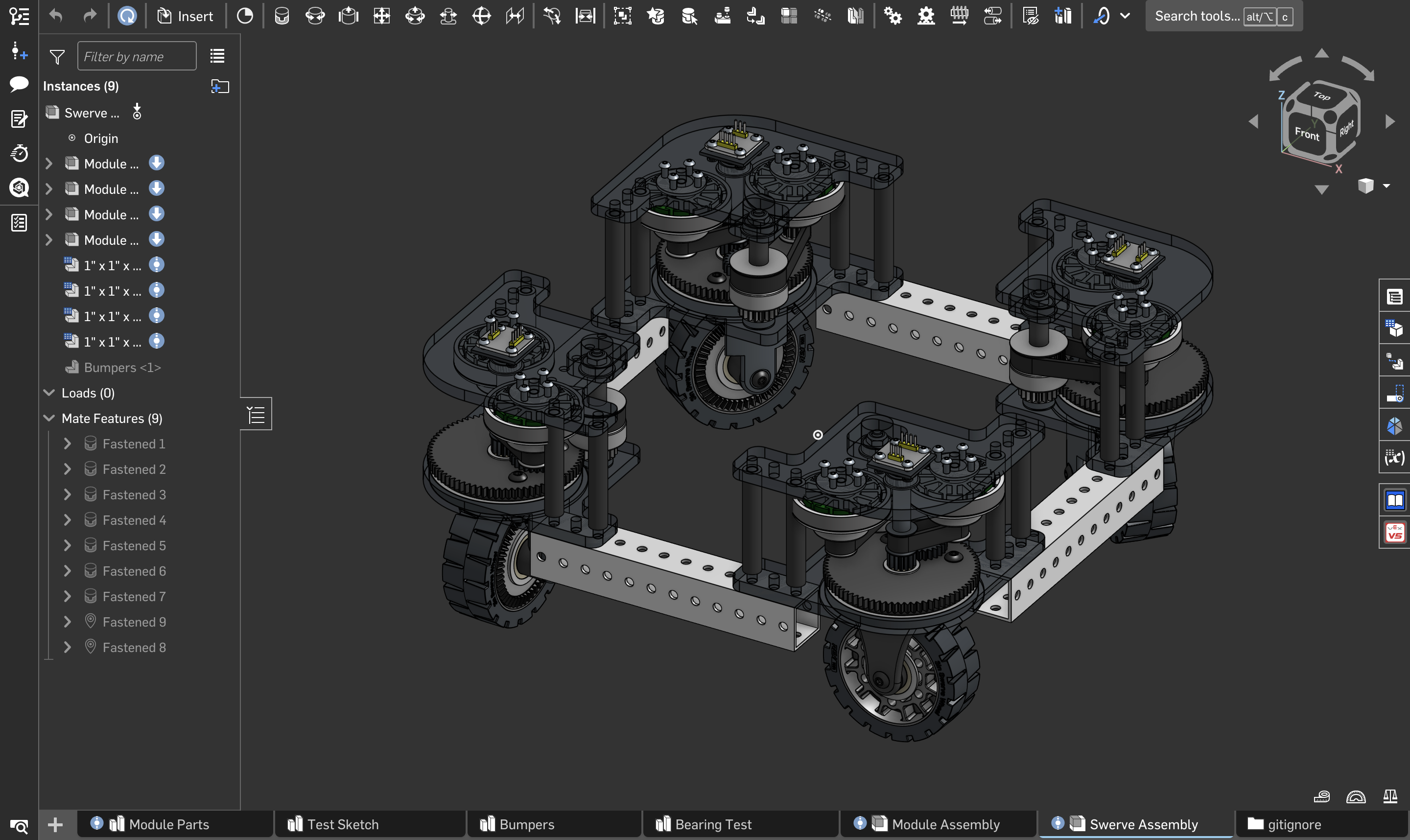
A 12×12 in. custom swerve drive built around a purpose-designed PCB carrier board and field-oriented motor control. Compact, but it proves the point. We can pull mechanical, electrical, and firmware into one working stack.

Mechanical designPCB design (KiCad)ESP32-S3 master controllerMKS ESP32 FOC driversAS5600 encodersELRS receiverMotor control algorithmsSystem integration
Read the writeup

The Mini Swerve Drive is a compact four-module swerve drivetrain. Every module steers and drives on its own, mounted on a 12.25-inch square chassis. The robot moves in any direction while rotating at the same time, the same omnidirectional control system you'll find on competition robots and industrial mobile platforms. Each module pairs a brushless drive motor with a brushless steering motor through an 8:1 reduction. A magnetic encoder closes the loop on wheel angle, giving us precise and repeatable positioning.

What makes this build different: we engineered nearly every layer in-house. The mechanical assembly came together in CAD from scratch. The control electronics live on a custom PCB carrier board we designed around an ESP32-S3 master controller. Field-oriented motor control runs on dedicated FOC drivers that talk over a shared bus. The master pulls commands from a radio receiver, runs swerve kinematics in real time, and coordinates eight motors at once. Mechanical design, custom circuitry, PCB layout, embedded firmware, motor control algorithms; one working platform pulls all of it together.

The Mini Swerve Drive doubles as proof of engineering capability and as the foundation for our education work. It shows the same core skills industrial automation demands: precise motion control, robust electronics design, system integration, and the ability to take a complex mechatronic system from idea to working hardware.

A formal physical build is on the way. We'll update this writeup once it's done.
Vision Driven Autonomous Arm

Vision Driven Autonomous Arm

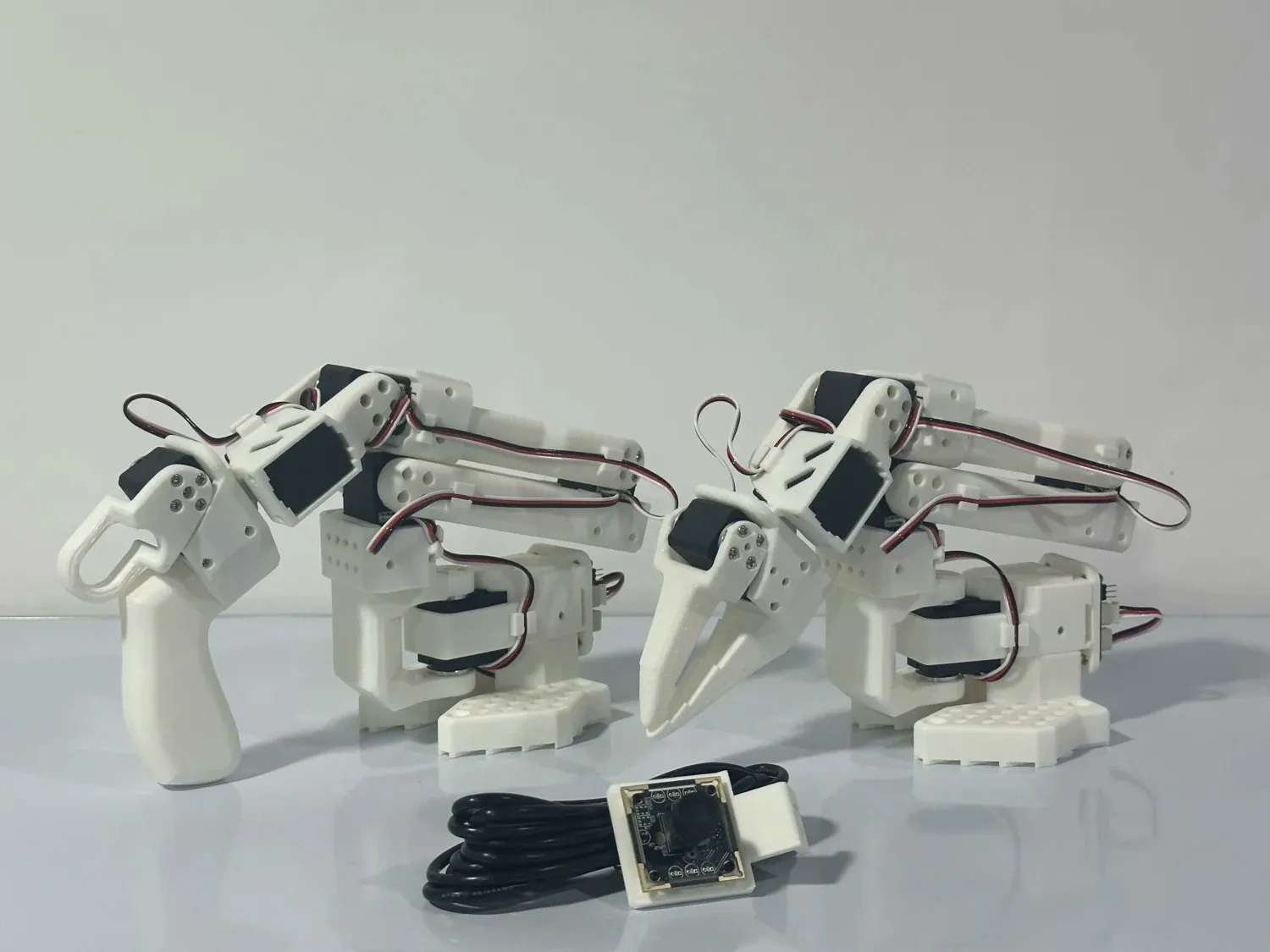
Our very first industry style project that sparked a year of research into vision driven automation. This robot arm was completely coded in a three-day hackathon, driven by an AI vision model, along with many open source softwares such as OpenCV, the arm is able to detect parts in frame, then to plan and exectue the motions depending on the scenario.

Computer visionRobotic manipulationAI / ML inferenceEmbedded controlSystem integration
Read the writeup

The Vision Driven Autonomous Arm is a robot that plays poker on its own. Point a camera at the table, deal it a hand, and it reads the cards, decides what to do, and physically acts on that decision. We designed and coded the entire system, hardware, vision, and decision logic, in a single three-day hackathon. It was our first taste of industry style automation, and it kicked off a year of research into vision driven robotics.

The arm sees the game through a 1080p USB webcam. We used OpenCV to capture and process the live video feed, isolating the cards in frame so the system always knows the current state of the game. From there a Google Gemini model acts as the brain. It takes the hand the arm is holding, reasons about the situation the way a human player would, and returns the best move: check or call, raise, or fold. This is the core of the project. Instead of hard coding poker strategy, we let an AI vision and reasoning pipeline make the call, then translated that call into motion.

Once Gemini picks a move, the arm runs a set of predetermined motions we modeled out for each action. Checking, folding, and raising each map to their own choreographed sequence on the SO-Arm100, a six degree of freedom robotic arm. An Arduino Uno (Elegoo R3) handles the physical interface: three momentary push buttons for Check/Call, Fold, and Raise, plus LED indicators that light up to show exactly what the arm is doing at any moment. Teaching an arm to reliably carry out these complex tasks, reading a scene, choosing an action, and executing the right physical sequence, is the same loop that drives real industrial automation.

For fun, we gave the robot a Poker Face. An Adafruit ST7735 1.8 inch 160x128 TFT LCD display shows the model's emotions and current actions in real time, so you can watch its mood shift as the game plays out. It turns a technical automation demo into something with personality, all designed and built in just three days.

Arm demo
Build vlog
FRC Competition Robot

FRC Competition Robot

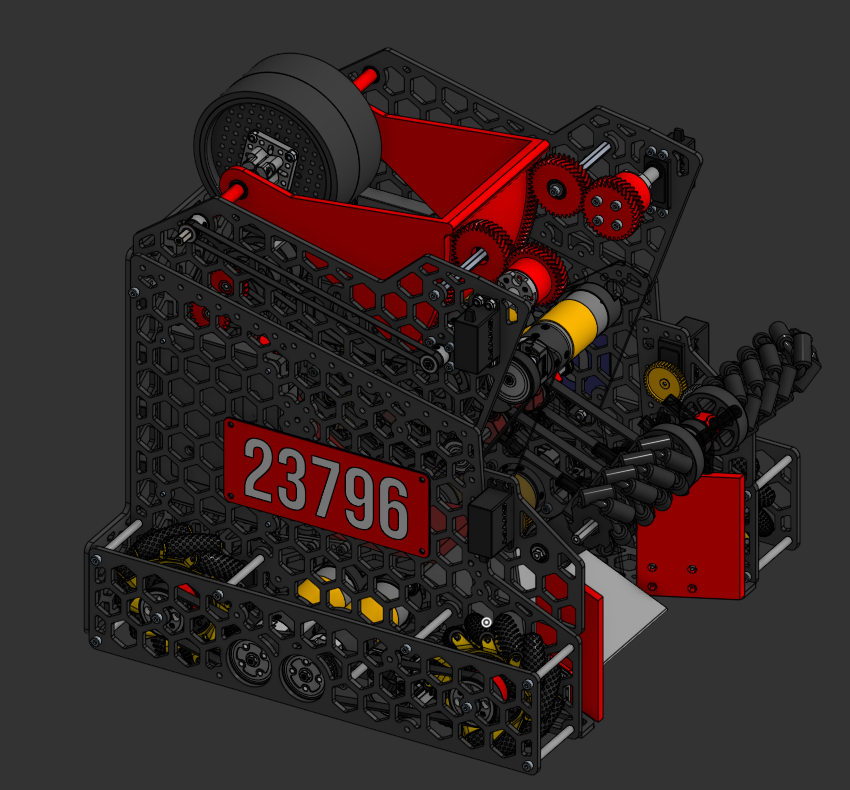
A full FRC competition robot, delivered under tight competitive constraints. Large-scale mechanical engineering, run as a team from start to finish.

Large-scale mechanical engineeringTeam project managementDesign under constraintsReal-world deployment
Read the writeup

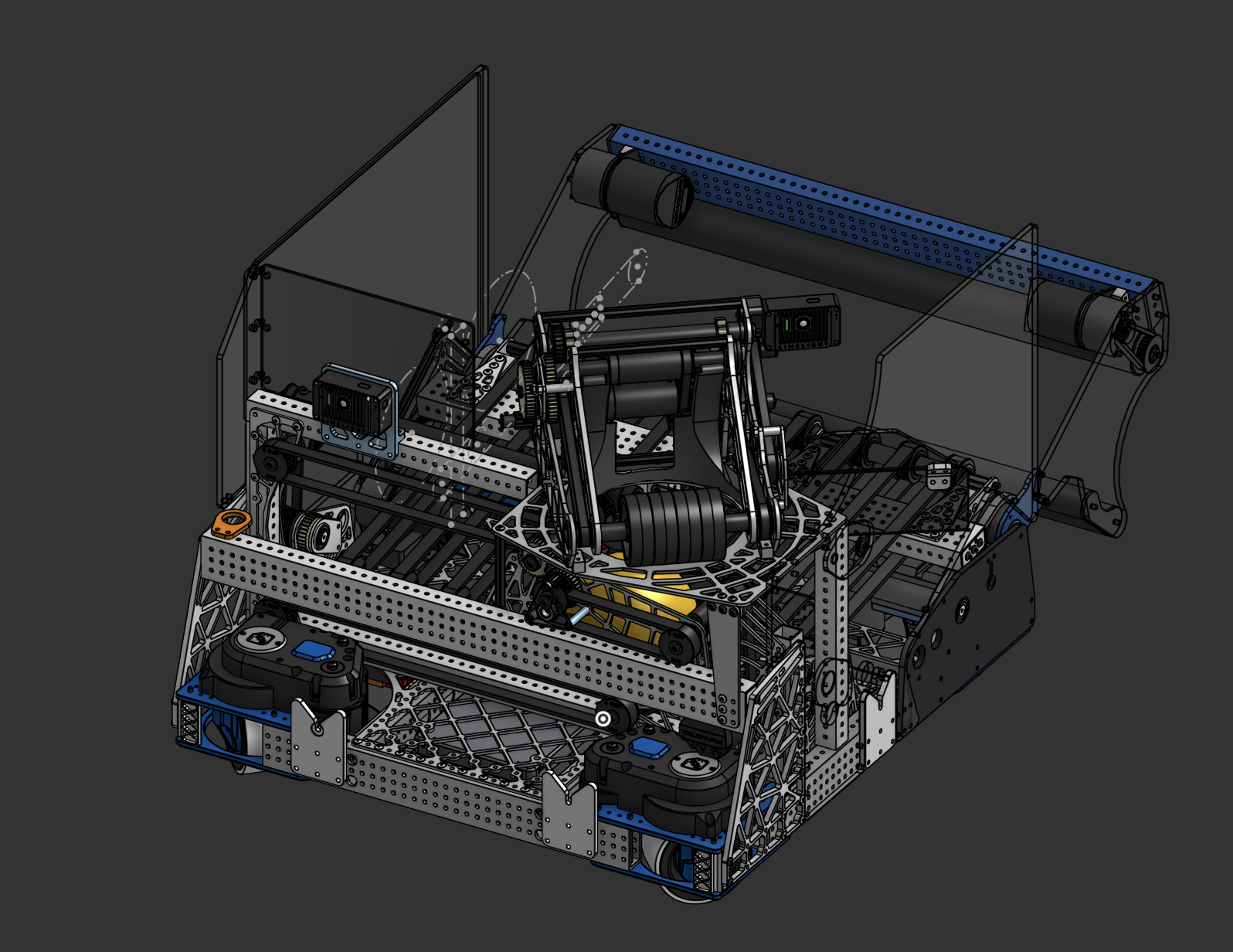
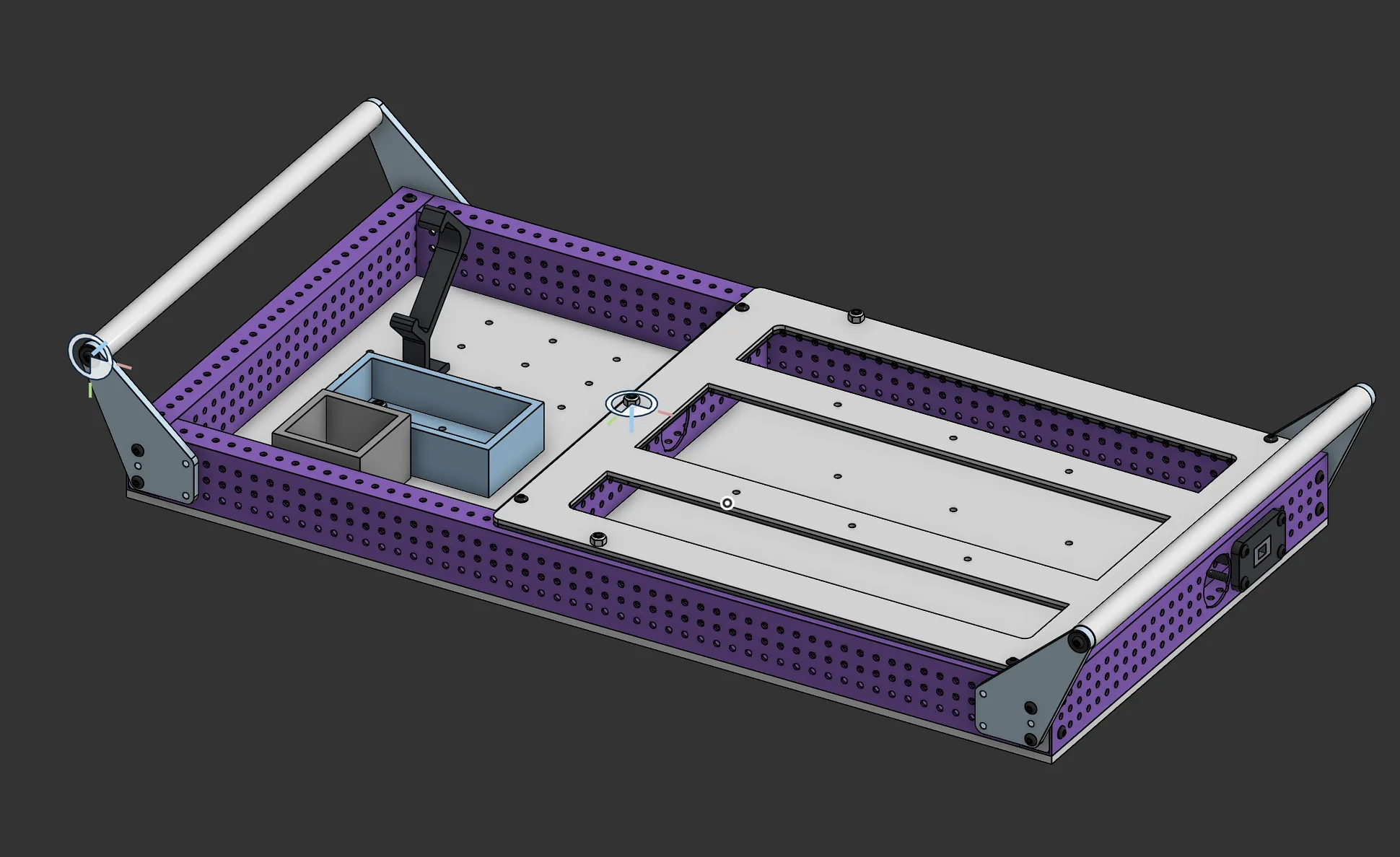
Our FRC season build, mechanical, electrical, and controls integrated under competition deadlines. The full-robot CAD, the routed parts layout, the brain pan (electronics tray), the intake, and the indexer all came together into a working robot. Below are CAD shots, in-progress photos, and bench tests.

Indexer test
Intake test
Brain pan demo
Aries — AI Vocal Assistant

Aries — AI Vocal Assistant

Congressional App Challenge Winner 2024

A dictation-controlled computer assistant. Speak to Aries and it operates your machine end to end, browser, documents, mouse and keyboard, plus Gemini-powered answers, all hands-free.

Software engineeringAI / MLSpeech recognitionGoogle Gemini integrationTechnical communication
Read the writeup

Aries is a dictation-controlled computer assistant we built as a team, and the project that won the 2024 Congressional App Challenge. It runs full computer actions from voice: browser support (search the web, open sites, navigate hands-free), a voice-controlled notepad for opening and editing documents, full mouse and keyboard control for anything not directly supported, and Google Gemini integration to answer queries and provide information on the fly.

Aries demo (Congressional App Challenge submission)

Side projects

Other cool things we've built along the way.

Custom Drone

Custom Drone

A drone built from the ground up — custom electronics stack, flight controller integration, and carefully tuned RF links.

Read the writeup

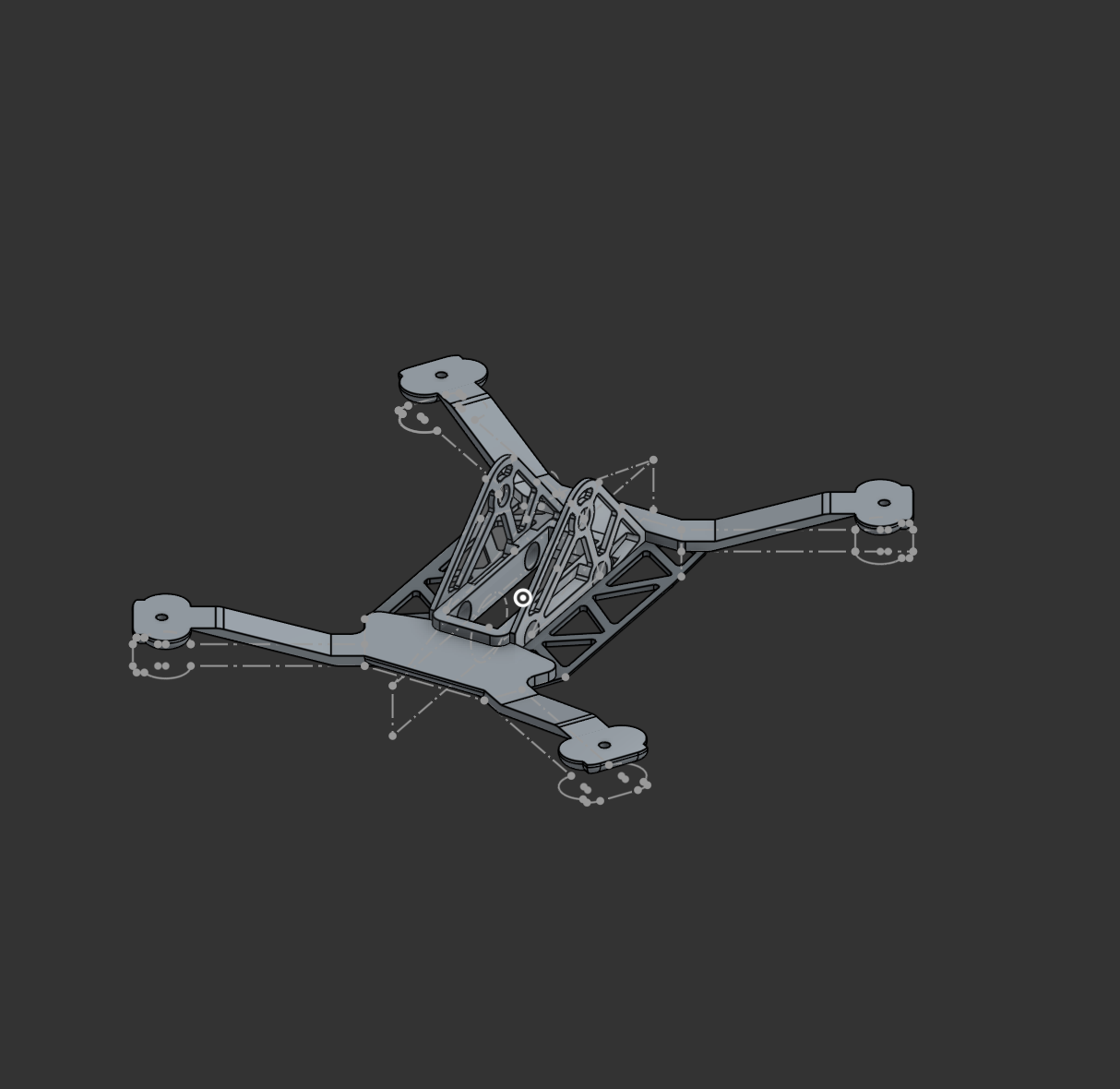
A drone designed and built end to end. The CAD model defines the airframe, with motors, ESCs, and the flight controller stack laid out around it. Bench tests below: motors first, then a full drone test.

Motor test
Drone test
Macropad

Macropad

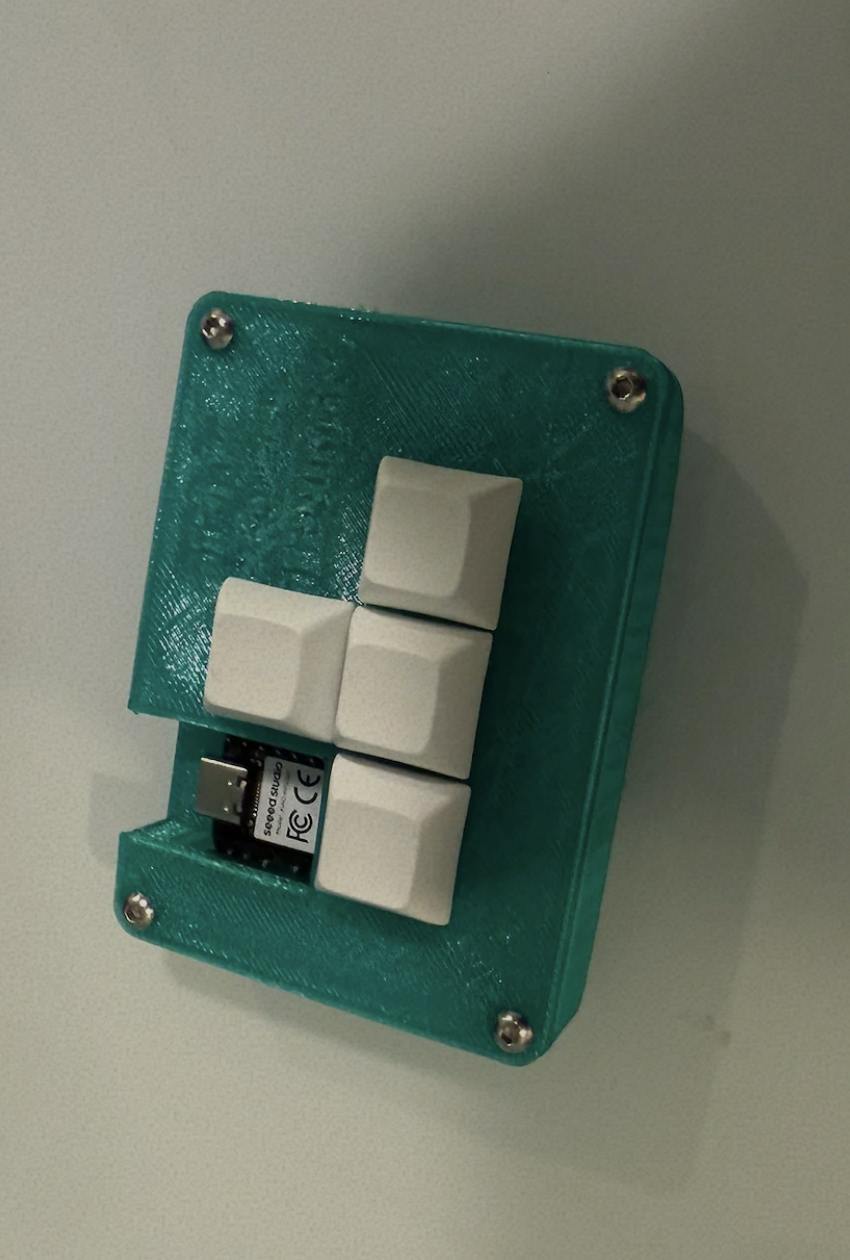
A custom mechanical macropad with a hand-routed PCB and bespoke firmware. Small build, the whole electronics-firmware-mechanical loop.

Read the writeup

A compact mechanical macropad with a custom PCB and firmware. Designed the board, soldered it up, and brought it to life with custom key mappings.

Macropad working demo
Mecanum Drivetrain

Mecanum Drivetrain

A four-wheel mecanum drivetrain with the drive software to match holonomic, omnidirectional motion coded with precise autonomous commands. The same kinematic model that underpins AGVs and material-handling robots in industrial automation.

Read the writeup

Mecanum wheels give you omnidirectional motion. The drivetrain can translate, strafe, and rotate while keeping its heading locked the whole time. That's how automated guided vehicles get around on a factory floor. We designed the four-wheel platform and wrote the controls software end to end: inverse kinematics for the four mecanum wheels, field-oriented teleop, and the driver interface. The build is small. The problem is the same one we solve at industrial scale.

Mecanum drivetrain demo
FRC Driver Station

FRC Driver Station

A purpose-built FRC driver station. Custom layout for the operator inputs and a clean home for the laptop and radio.

Read the writeup

Our custom FRC driver station, built to keep controls, the radio, and the driver laptop in one tidy package on the field.